
Bolívar · Colombian Caribbean
- Position
- 10.4°N · 75.5°W
- Region
- Bolívar, Colombia
Overview
A colonial port with island neighbors
Cartagena de Indias, the capital of Colombia's Bolívar department, faces the Caribbean around a large, sheltered bay. Its walled old city and fortifications are inscribed as a UNESCO World Heritage Site, "Port, Fortresses and Group of Monuments, Cartagena," listed in 1984.
The bay has two entrances, Bocagrande to the north and Bocachica to the south, and is lined with neighborhoods that matter for boaters: the high-rise beachfront of Bocagrande, the residential island-district of Manga, where most marinas are found, and the industrial zone further in.
Beyond the bay lie the coral islands of the Rosario archipelago, about 20 km from the city, and the long peninsula-island of Barú. Most of these waters belong to a national natural park, which sets clear rules for visitors, so a private charter here is as much about careful planning as it is about beautiful water.
Manga marinas
Most private boats are based in Manga, a short ride from the historic center, at marinas such as Club Náutico de Cartagena and Marina Santacruz. Departure clearance is handled by the vessel's captain or operator.
La Bodeguita tourist dock
The public tourist dock near the walled city is the main departure for shared island tours, and where national park entry fees have traditionally been collected.


The islands
Rosario, Barú and the bay
The national park received well over a million visitors in 2025, so timing and route planning make a real difference to your day.
Islas del Rosario
An archipelago of small coral islands, including Isla Grande and the islands of the national park, with designated snorkel trails among the reefs. Most islands are reachable in about an hour or less from the city docks.
Barú & Playa Blanca
Barú is separated from the mainland by the Canal del Dique and has been linked by road bridge since 2014, so Playa Blanca, inside the park's Playa Blanca sector, can be busy and has visitor limits.
Cholón
A lagoon on Barú known as a gathering spot for boats, within the park's planning area. It is on Barú, not in the Rosario Islands.
Isla Tierra Bomba
An island across the bay from Cartagena, beside the Bocachica entrance.
Sunset past the walled city
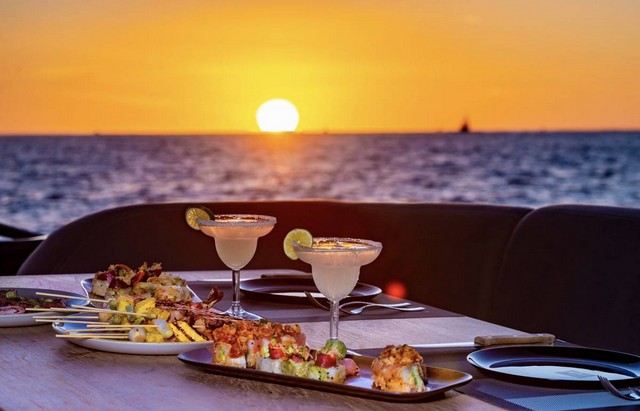
An evening cruise past the Bocagrande skyline and the old city walls. The bay is a working port, so it is for sightseeing rather than snorkeling.
Park rules
Visiting the national park
The Corales del Rosario y de San Bernardo National Natural Park, managed by Parques Nacionales Naturales de Colombia, regulates navigation channels, dive and mooring sites and anchoring areas. For visitors, two things matter most:
- Entry fee. A per-person park fee applies, updated each year.
- Mandatory insurance. Visitors to the park and Isla Barú must carry an accident and assistance insurance policy; without it, visitors may not disembark. Authorities resumed checks in 2026.
We confirm how fees and insurance are handled for your charter before you book.
Seasons
Drier and breezier from roughly late November to April, with the least rain from January to March. The sea breeze can make open-water crossings livelier.
Wetter from about May to November. Temperatures stay around 27–30 °C all year, with high humidity.
Hurricane season in the Atlantic basin runs from June 1 to November 30.
Current fleet & availability
Ask about boats in Cartagena
Tell us your date, group size and plans, from a Rosario Islands day to a sunset cruise past the walled city. We will check the vessels available.
Related destinations
More of the Americas
Cartagena FAQ
Frequently Asked Questions About Yacht Charters in Cartagena, Colombia
Straight answers to the questions travelers ask most about chartering in Cartagena. If yours is not here, ask us when you request a quote.
Where do private boats in Cartagena leave from?
Most private boats are based at the marinas of Manga, such as Club Náutico de Cartagena and Marina Santacruz. Shared tours use the La Bodeguita tourist dock near the walled city.
How far are the Rosario Islands?
The archipelago lies about 20 km from Cartagena, and most islands can be reached in about an hour or less, depending on the vessel and sea conditions.
Is there a park fee for the Rosario Islands?
Yes, a per-person national park entry fee applies, and the amount changes each year. We confirm how it is handled for your charter.
Do I need insurance to visit the Rosario Islands and Barú?
Yes. Visitors to the national park and Isla Barú must carry an accident and assistance insurance policy; without it, visitors may not be allowed to disembark.
Is Playa Blanca crowded?
It can be. Playa Blanca on Barú is reachable by road as well as by boat and has visitor limits set by the park.
What is Cholón?
A lagoon on Barú, within the park's planning area, known as a gathering spot for boats.
Can we snorkel in Cartagena?
Yes, on the reefs of the Rosario Islands, along designated snorkel trails. The bay itself is a working port and not a snorkel destination.
When is the best time to charter in Cartagena?
The drier, breezier period from roughly late November to April is the most popular. May to November is wetter.
Can we take a sunset cruise past the walled city?
Yes. An evening cruise on the bay passes the high-rise Bocagrande skyline and the walled old city, a UNESCO World Heritage Site since 1984. It can be a charter of its own or the end of an island day, timed to return for sunset over the walls.
Can a private boat anchor anywhere in the Rosario Islands?
No. The Corales del Rosario y San Bernardo National Natural Park, managed by Parques Nacionales Naturales de Colombia, regulates navigation channels, dive and mooring sites and anchoring areas, so stops are planned within those rules.
How long does it take to reach Barú by boat?
About 45 minutes from Cartagena, depending on the vessel and sea conditions. Barú lies south of the city, separated from the mainland by the Canal del Dique, and is home to Playa Blanca and the Cholón lagoon.